
Structure & Envelope · Exterior trim
Exterior trim for windows, doors, and corners
Trim is the frame around each window and door, plus the corners and base of your walls. It shapes the look of the house and, done right, keeps water out of the openings. Most homes match trim to the siding.
Every option is compared on the same five things:
Your options
Frame your windows
Trim usually follows the siding: wood trim with wood siding, fiber cement with fiber cement, and a slim metal edge with metal.
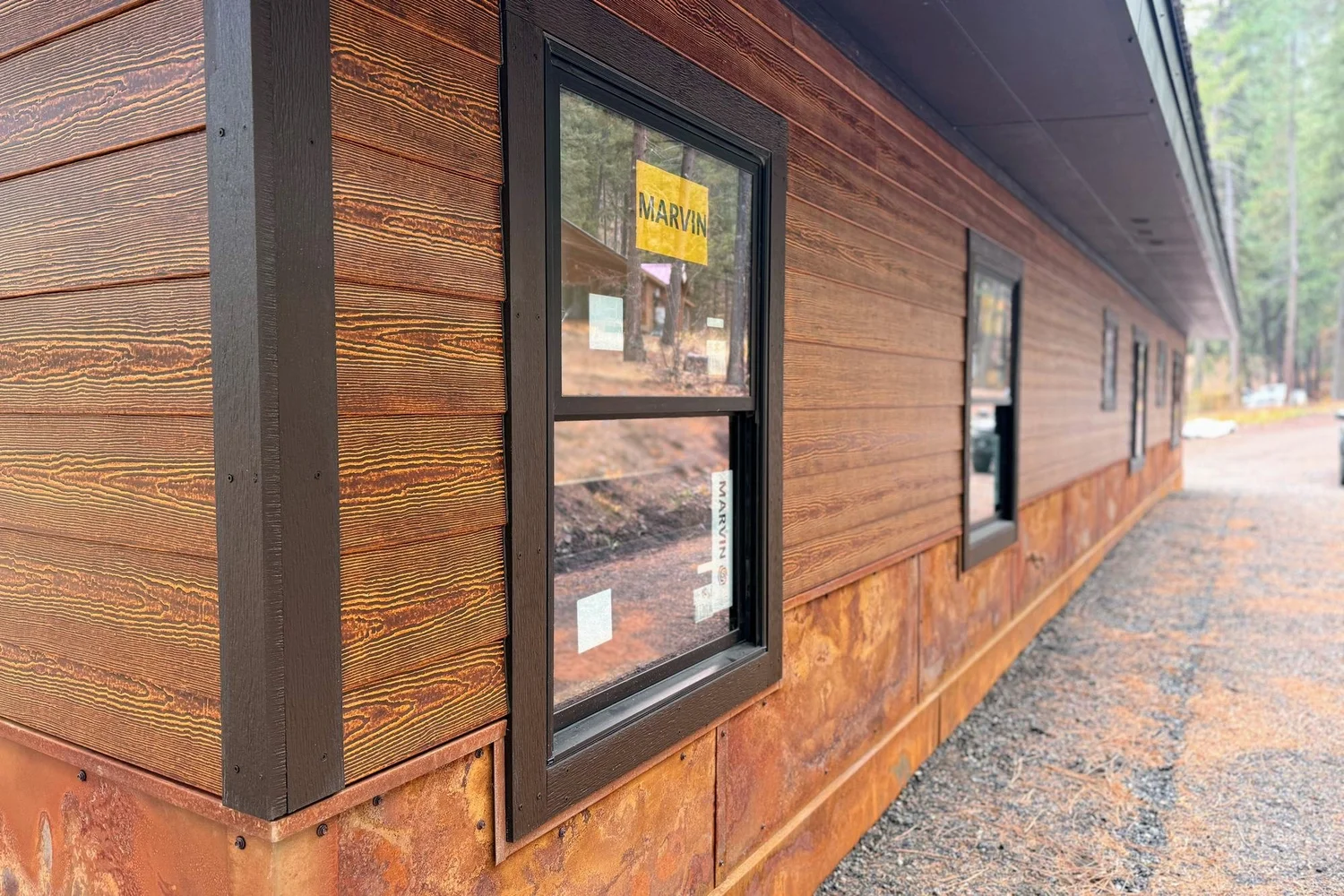
Wood trim
Rough-sawn casings around windows and doors and boards at the corners, in the same pre-stained wood as the siding. It frames each opening with a warm, craftsman look.
- Look / Style
- Rough-sawn casings and corners matching wood siding
- Maintenance
- Medium
- Lifespan
- 40+ years with re-staining
- Relative Cost
- $$
- Best For
- Wood siding, cabin, and craftsman homes
Why people pick it
- Matches wood siding exactly
- Windows are easier to replace later
- Warm, handmade character
Trade-offs
- Re-stain along with the siding
- Burns, like all wood
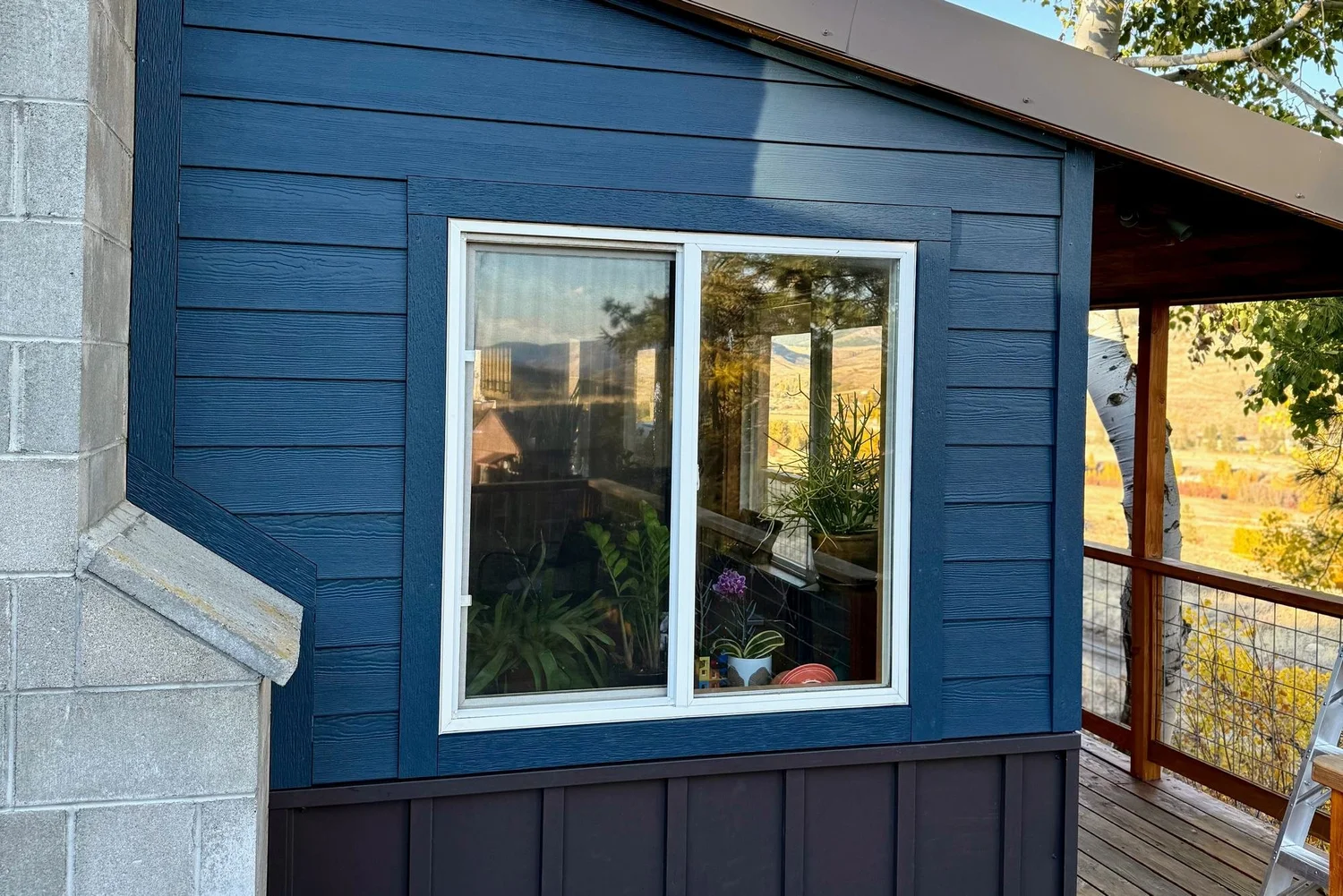
Fiber cement trim
Smooth or wood-grain fiber cement casings and corner boards, pre-painted to match or contrast with the siding. Clean, crisp lines that won't rot or burn.
- Look / Style
- Crisp painted casings and corner boards
- Maintenance
- Low
- Lifespan
- 50+ years
- Relative Cost
- $$
- Best For
- Fiber cement siding, wildfire-conscious sites
Why people pick it
- Won't burn or rot
- Factory paint, low upkeep
- Windows are easier to replace later
Trade-offs
- Joints get a bead of caulk that needs checking over the years
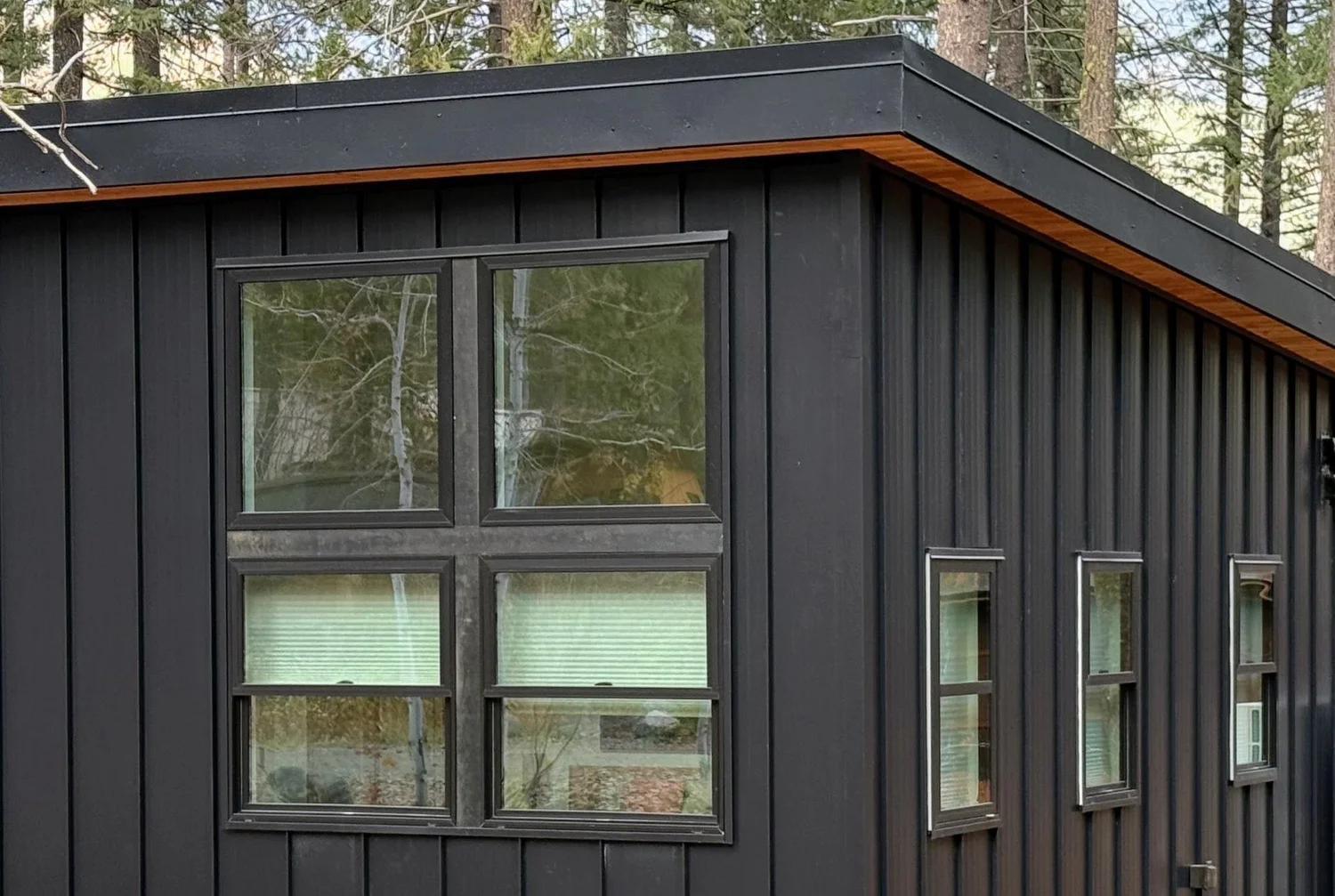
Trimless (metal edge)
No casing around windows: the siding runs right up to the window, finished with a slim metal channel or flashing. It's the clean look of most modern and metal-sided homes.
- Look / Style
- Siding meets the window with a slim metal edge
- Maintenance
- Low
- Lifespan
- 40+ years
- Relative Cost
- $$
- Best For
- Metal and modern panel homes
Why people pick it
- Minimal, modern look
- Metal edges won't burn or rot
Trade-offs
- Replacing a window later means disturbing the siding
- Leaves no room for sloppy work, so it takes careful flashing
Side by side
| Tag | Wood trim | Fiber cement trim | Trimless (metal edge) |
|---|---|---|---|
| Look / Style | Rough-sawn casings and corners matching wood siding | Crisp painted casings and corner boards | Siding meets the window with a slim metal edge |
| Maintenance | Medium | Low | Low |
| Lifespan | 40+ years with re-staining | 50+ years | 40+ years |
| Relative Cost | $$ | $$ | $$ |
| Best For | Wood siding, cabin, and craftsman homes | Fiber cement siding, wildfire-conscious sites | Metal and modern panel homes |
How we build it
How we trim and flash every home
Whatever trim you choose, a few details never change.
Flashed at every opening
Every window and door gets a metal flashing over its head that kicks water out past the trim, and so does every belly band between floors. It's a small detail that keeps water out of the wall for decades.
- Water shed away from the window top
- Less caulk to rely on
Solid corners and a clean base
Corner boards are screwed together as butt joints rather than mitered, so they stay tight instead of opening up over time. At the bottom of the wall, a metal drip or trim board finishes the siding, and screened vents keep bugs out of the air gap behind it.
- Corners that stay tight
- A neat, bug-proof base
FAQ
Common questions
Do I need trim around my exterior windows?
Not always. Trim frames the window and makes a future window swap easier. Trimless openings with a slim metal edge suit modern and metal-sided homes, but take careful flashing.
Is fiber cement trim better than wood trim?
It lasts longer with less upkeep and won't burn. Wood trim matches wood siding and has more character, but needs re-staining with the siding.
How do you keep water out around windows?
The window is sealed to the weather barrier first, then every window and door gets a metal flashing over its head that kicks water out past the trim.
Want to see these in person?
We'll bring samples to your site during pre-construction and price the options on your plans.