Structure & Envelope · Siding
Siding built for Methow winters
Siding is the face of your home and its first defense against snow, sun, and fire. Every option here goes over the same weather-tight wall built by your envelope package, so this choice comes down to look, upkeep, and fire resistance.
Every option is compared on the same five things:
Your options
Pick the look you love
None of these is better than the others: they're different looks with different upkeep. Relative cost compares installed siding on a typical 2,000 square foot home.
Fiber cement lap siding
Long horizontal boards made of fiber cement, a blend of cement and wood fiber. It arrives pre-painted in almost any color, or a two-tone wood look, so there's no painting on site.
- Look / Style
- Classic horizontal boards, solid color or two-tone wood look
- Maintenance
- Low
- Lifespan
- 50+ years
- Relative Cost
- $$
- Best For
- Traditional look, wildfire-conscious sites, good value
Why people pick it
- Won't burn or rot
- Factory finish, low upkeep
- Classic look at a fair price
Trade-offs
- Reads as painted siding, not real wood
- Cut ends and trim joints need occasional touch-up
Fiber cement board & batten
Large fiber cement sheets with narrow strips, called battens, over the seams for a vertical barn or farmhouse look. Pre-painted like lap siding, and the quickest siding we install.
- Look / Style
- Vertical barn or farmhouse lines
- Maintenance
- Low
- Lifespan
- 50+ years
- Relative Cost
- $–$$
- Best For
- Barn or farmhouse look on a budget
Why people pick it
- Won't burn or rot
- Barn look at the lowest cost
- Low upkeep
Trade-offs
- Batten nail heads show unless filled and touched up
Fiber cement panels with metal reveals
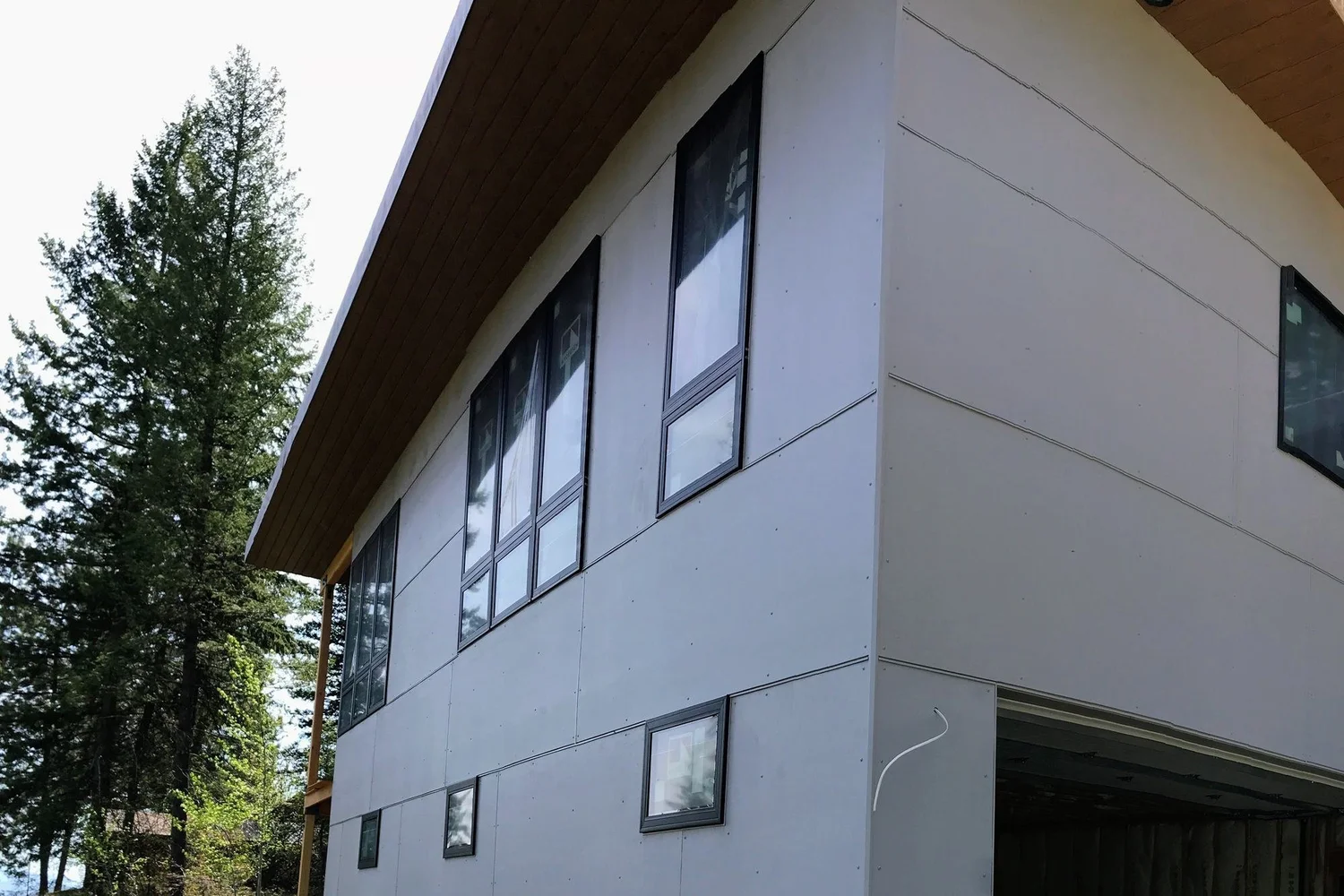
Large smooth fiber cement panels set in a grid, with slim aluminum channels at the seams for a crisp, modern look. Pre-painted at the factory.
- Look / Style
- Smooth panels in a clean grid
- Maintenance
- Low
- Lifespan
- 50+ years
- Relative Cost
- $$$
- Best For
- Modern and contemporary homes
Why people pick it
- Clean, contemporary lines
- Won't burn or rot
- Low upkeep
Trade-offs
- Costs more than lap or board & batten
- Panel layout has to be planned around the windows
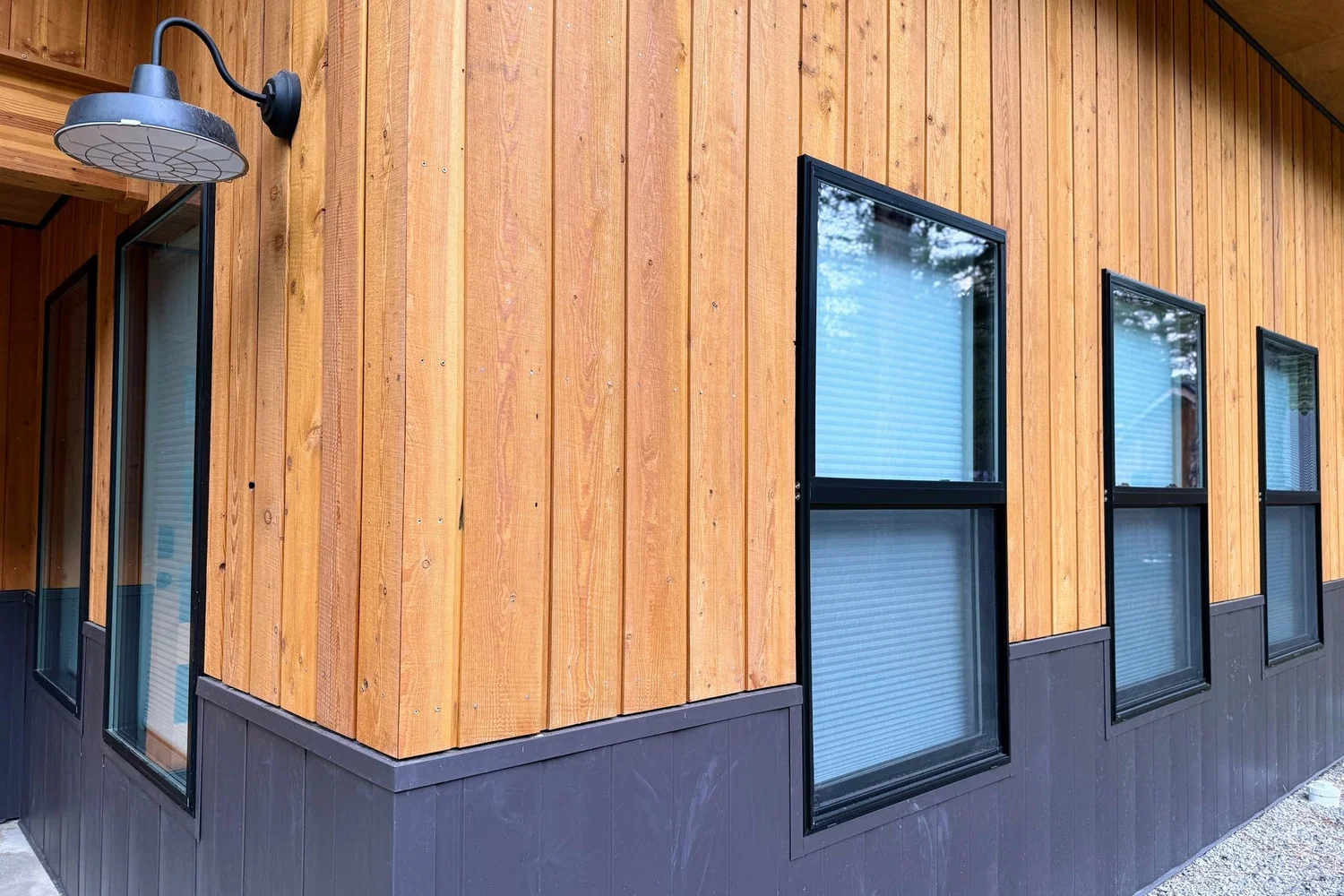
Rough-sawn wood siding
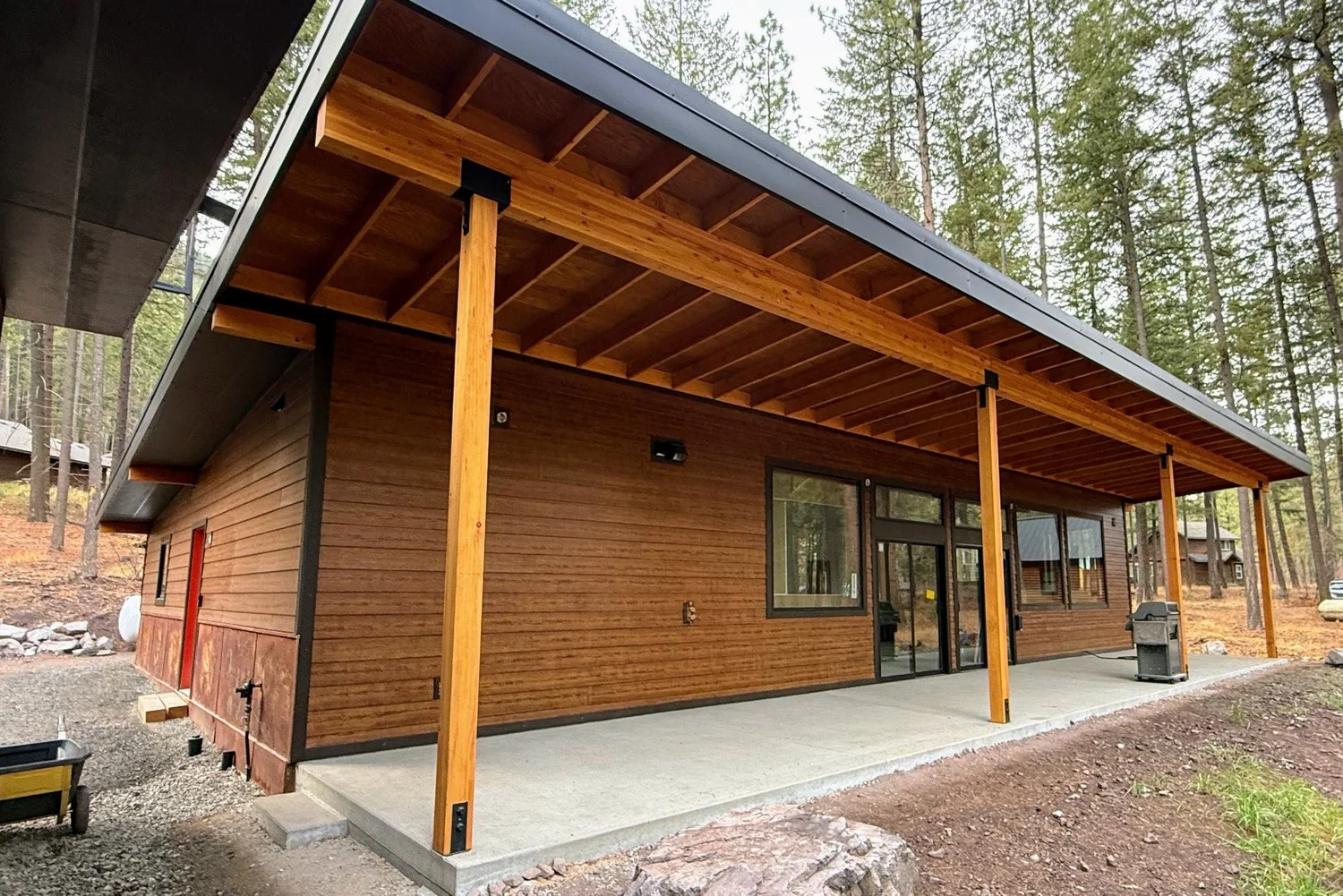
Real rough-sawn fir boards, stained at the factory and hung vertically with overlapping edges. It's the warm, cabin-in-the-woods look many Methow homes are known for, and our favorite to build with. Wood does burn, so on higher wildfire-risk sites we pair it with metal or fiber cement low on the walls.
- Look / Style
- Warm, rustic Methow cabin
- Maintenance
- Medium
- Lifespan
- 40+ years with re-staining
- Relative Cost
- $$$
- Best For
- Cabin character on lower wildfire-risk sites
Why people pick it
- Warm, natural cabin character
- Real wood that weathers gracefully
- Factory stain on every face
Trade-offs
- Re-stain every several years on sunny walls
- Burns: the weakest choice for wildfire risk
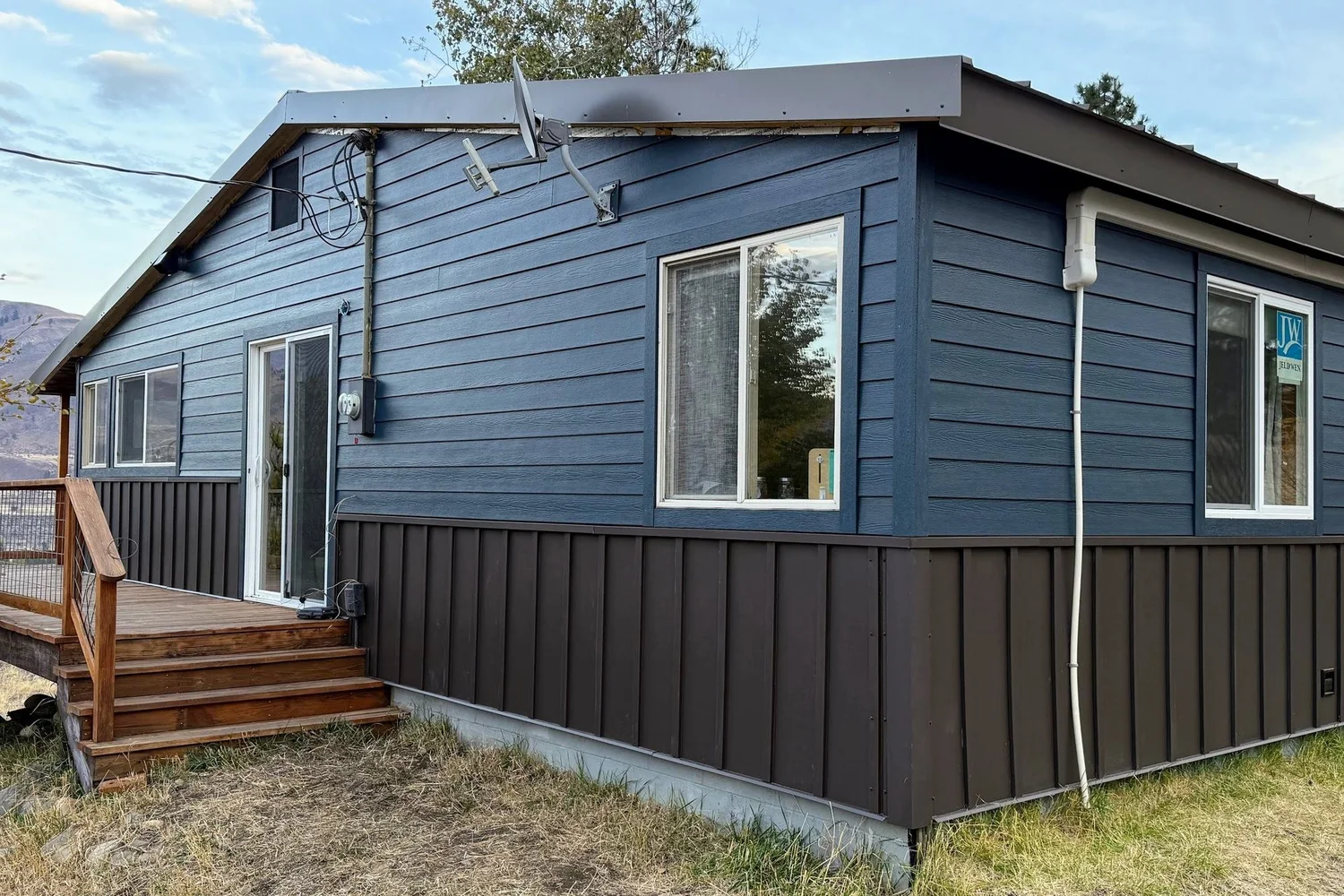
Painted metal siding
Steel panels with a baked-on paint finish, in corrugated, ribbed, board & batten, or flat profiles, with exposed or hidden screws. It can cover the whole house, one accent wall, or just the lower few feet as a wainscot that stands up to snow.
- Look / Style
- Agrarian to modern, many profiles and colors
- Maintenance
- Low
- Lifespan
- 40+ years
- Relative Cost
- $$–$$$
- Best For
- Fire protection, snowy walls, accents, and wainscots
Why people pick it
- Won't burn
- Shrugs off snow piled against the wall
- Many profiles and colors, agrarian to modern
Trade-offs
- Can dent if hit
- Hidden-screw profiles cost more
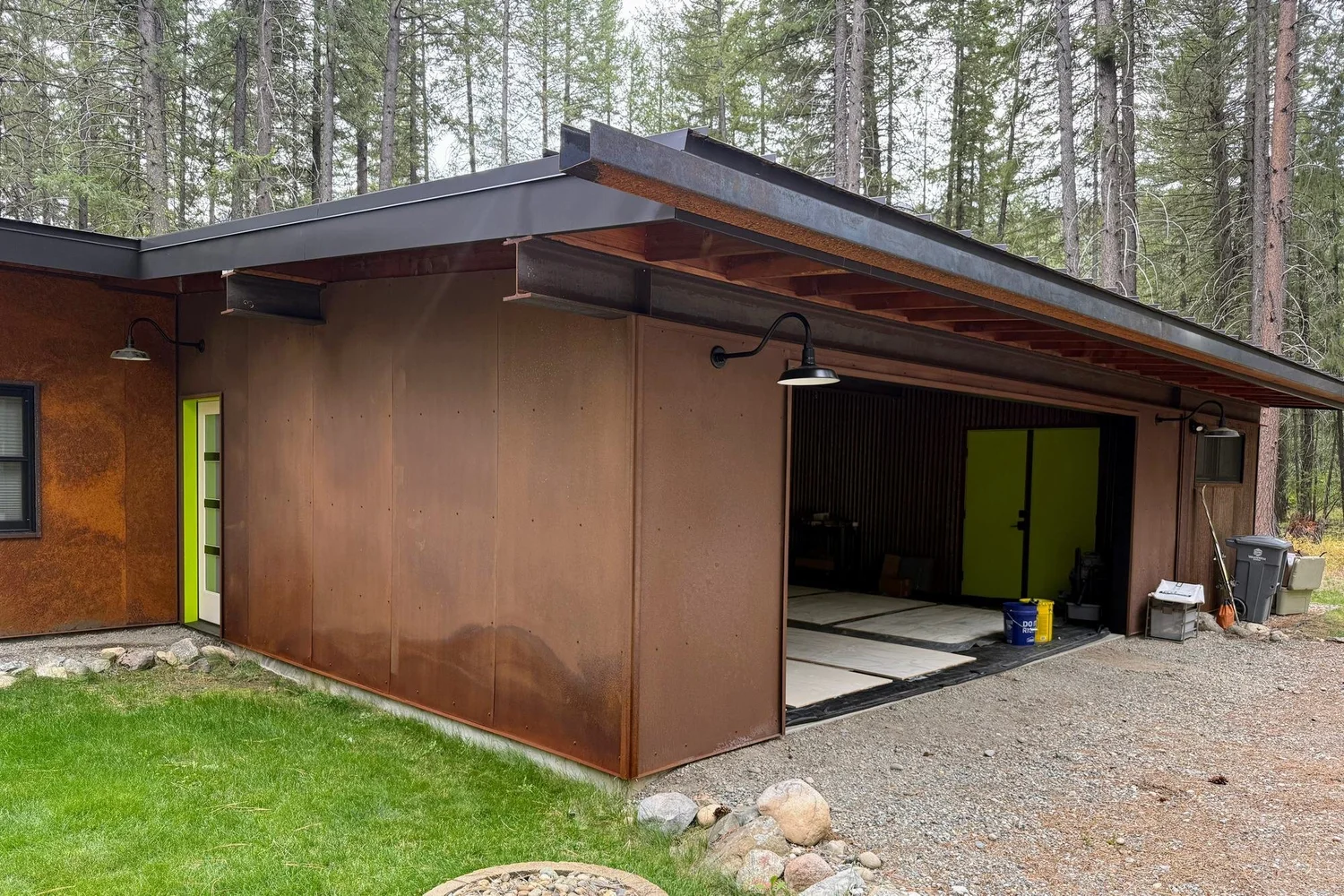
Cor-Ten weathering steel
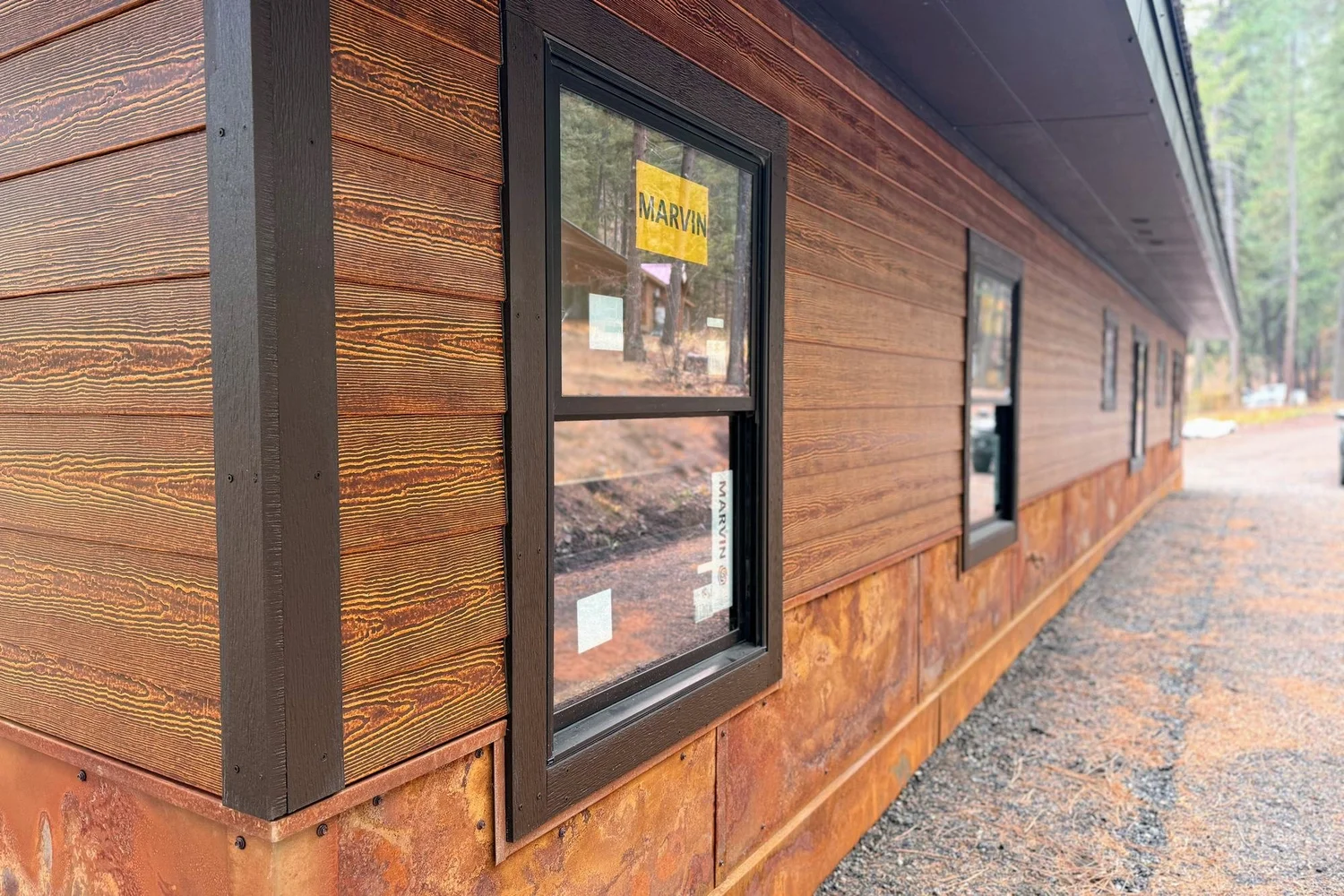
Bare weathering steel that rusts to a deep, protective brown patina, with no paint to maintain. It's a striking modern-rustic look that suits the Methow's dry climate, and it won't burn.
- Look / Style
- Rusted steel, modern-rustic
- Maintenance
- Low
- Lifespan
- 50+ years
- Relative Cost
- $$$
- Best For
- Fire protection, dry sites, modern-rustic homes
Why people pick it
- No paint or stain, ever
- Won't burn
- Rich color that deepens with age
Trade-offs
- Rust runoff can stain concrete and stone below while it patinas
- Shouldn't sit buried in wet snow or soil
Side by side
| Tag | Fiber cement lap siding | Fiber cement board & batten | Fiber cement panels with metal reveals | Rough-sawn wood siding | Painted metal siding | Cor-Ten weathering steel |
|---|---|---|---|---|---|---|
| Look / Style | Classic horizontal boards, solid color or two-tone wood look | Vertical barn or farmhouse lines | Smooth panels in a clean grid | Warm, rustic Methow cabin | Agrarian to modern, many profiles and colors | Rusted steel, modern-rustic |
| Maintenance | Low | Low | Low | Medium | Low | Low |
| Lifespan | 50+ years | 50+ years | 50+ years | 40+ years with re-staining | 40+ years | 50+ years |
| Relative Cost | $$ | $–$$ | $$$ | $$$ | $$–$$$ | $$$ |
| Best For | Traditional look, wildfire-conscious sites, good value | Barn or farmhouse look on a budget | Modern and contemporary homes | Cabin character on lower wildfire-risk sites | Fire protection, snowy walls, accents, and wainscots | Fire protection, dry sites, modern-rustic homes |
Mixing materials
Two materials, one wall
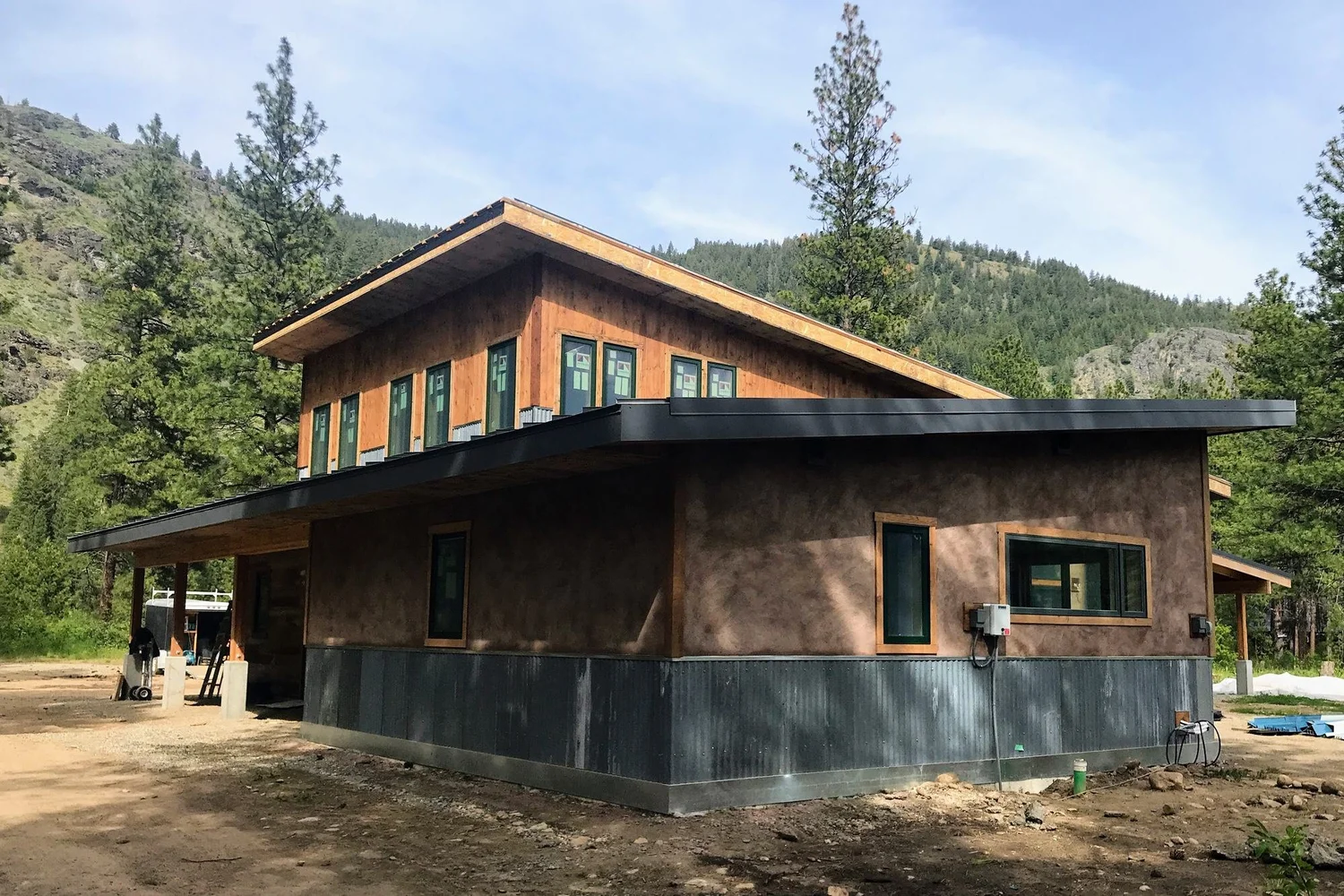
Many of our homes combine siding. A metal wainscot along the bottom few feet stands up to snow sliding off the roof and to embers, with wood or fiber cement above. Fiber cement shingles add an accent in a gable peak or above a belly band between floors.
- Metal wainscot under wood or fiber cement
- Fiber cement shingles in a gable or above a belly band
- A full metal or Cor-Ten accent wall
Set by your envelope package
What's behind the siding
The weather barrier, the gap behind the siding, and how it's fastened aren't separate choices. They come with the envelope package you pick, so every siding option works with your walls.
Vertical siding and metal panels get an extra layer of horizontal strips to fasten to, on every package.
Good: drainage wrap and a layer of foam board, with your siding nailed through to the framing using extra-long nails.
Better: a vented air gap behind the siding, over mineral wool board and taped sheathing, so the wall can drain and dry.
Best: the same vented air gap, over a fully adhered weather membrane on plywood sheathing.
How we build it
Finished before it goes up
Our siding and trim arrive finished from the factory: fiber cement pre-painted in your color, wood pre-stained on every face, metal with a baked-on finish, and Cor-Ten left bare to weather. A finish applied in a shop covers every edge and back, lasts longer, and keeps the paint crew off your schedule.
Caring for your siding
| Material | What it needs |
|---|---|
| Fiber cement | Rinse every few years and touch up nicks with the factory-matched paint kit. Plan on repainting after many years. |
| Rough-sawn wood | Re-stain every 4–8 years on south and west walls, less often on shaded walls. |
| Painted metal | Rinse now and then. The baked-on finish carries a long manufacturer warranty. |
| Cor-Ten | Nothing. Keep snow piles and soil off the bottom of the wall. |
FAQ
Common questions
What's the most fire-resistant siding?
Fiber cement and metal, including Cor-Ten, don't burn, which makes them the strongest choices in wildfire country. Real wood burns, so on higher-risk sites we pair it with metal or fiber cement low on the walls and near decks, where embers collect.
Is fiber cement better than wood siding?
Not better, different. Fiber cement comes pre-painted, resists fire and rot, and needs little upkeep. Wood has a warmth no product imitates, but it needs re-staining every several years on sunny walls.
Can I mix siding materials?
Yes, and it often works best. A metal wainscot along the bottom of the walls stands up to piled snow and embers, with wood or fiber cement above. Shingles in a gable add a nice accent.
Want to see these in person?
We'll bring samples to your site during pre-construction and price the options on your plans.