
Structure & Envelope · Insulation
A warm blanket, with no gaps
Insulation is the blanket around your home. Your envelope package sets what goes in the walls, roof, and floor, and how thick it is. Every package gets the same care: a local crew installs it, and we check every wall and ceiling before the drywall goes up.
Your envelope package decides the insulation, so there's nothing to pick here. The one thing you can add is sound insulation between rooms.
Every Bedrock home
How we build it
Insulation wraps the whole house, roof to floor, with board on the outside that covers the framing so the studs don't leak heat.
Installed by a local crew, checked by us
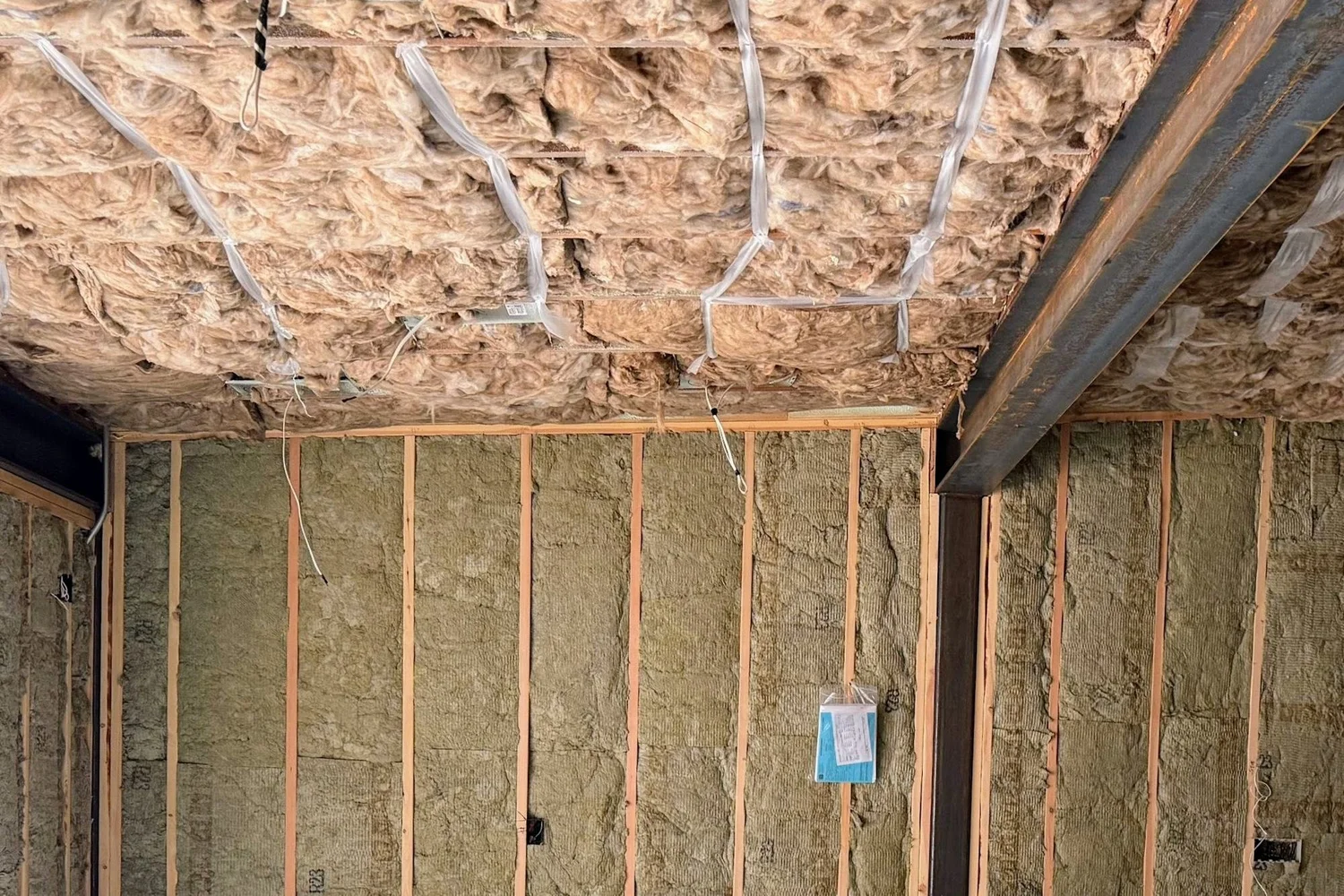
A local insulation crew installs the insulation inside the walls and attic, and we install the rigid board on the outside. Before any drywall goes up, we walk every wall and ceiling looking for gaps, squashed spots, and missed corners.
No gaps hidden behind the drywall
Corners and headers insulated, not left hollow
One builder responsible for the whole envelope
Set by your envelope package
What goes in the walls and roof
R-value measures how well insulation slows heat loss; higher is warmer. Floor insulation depends on your foundation type as well as your package.
Good package
Fiberglass batts + foam board
Fiberglass batts fill the 2x6 walls, with an inch of foam board on the outside to cover the studs. The attic gets deep blown-in insulation; vaulted roofs get spray foam under the roof deck with batts below.
Better package
Mineral wool inside and out
Mineral wool, a stone-based insulation that won't burn and isn't hurt by moisture, fills the walls and wraps the outside 2 inches thick. The attic gets deep blown-in cellulose; vaulted roofs get foam board on top of the roof deck.
Best package
A foot of dense-packed cellulose
Cellulose, recycled paper treated to resist fire and pests, is blown tightly into the 12-inch double wall. The attic gets R-80 or more; vaulted roofs get thick foam board above the roof deck with cellulose below.
Floor and foundation: see Foundation type for how each package insulates a slab or crawlspace.
Your choice
Sound insulation between rooms
Interior walls are usually left empty inside. Filling the right ones with sound-absorbing mineral wool keeps bathroom, laundry, and kitchen noise out of bedrooms and offices.
Standard interior walls
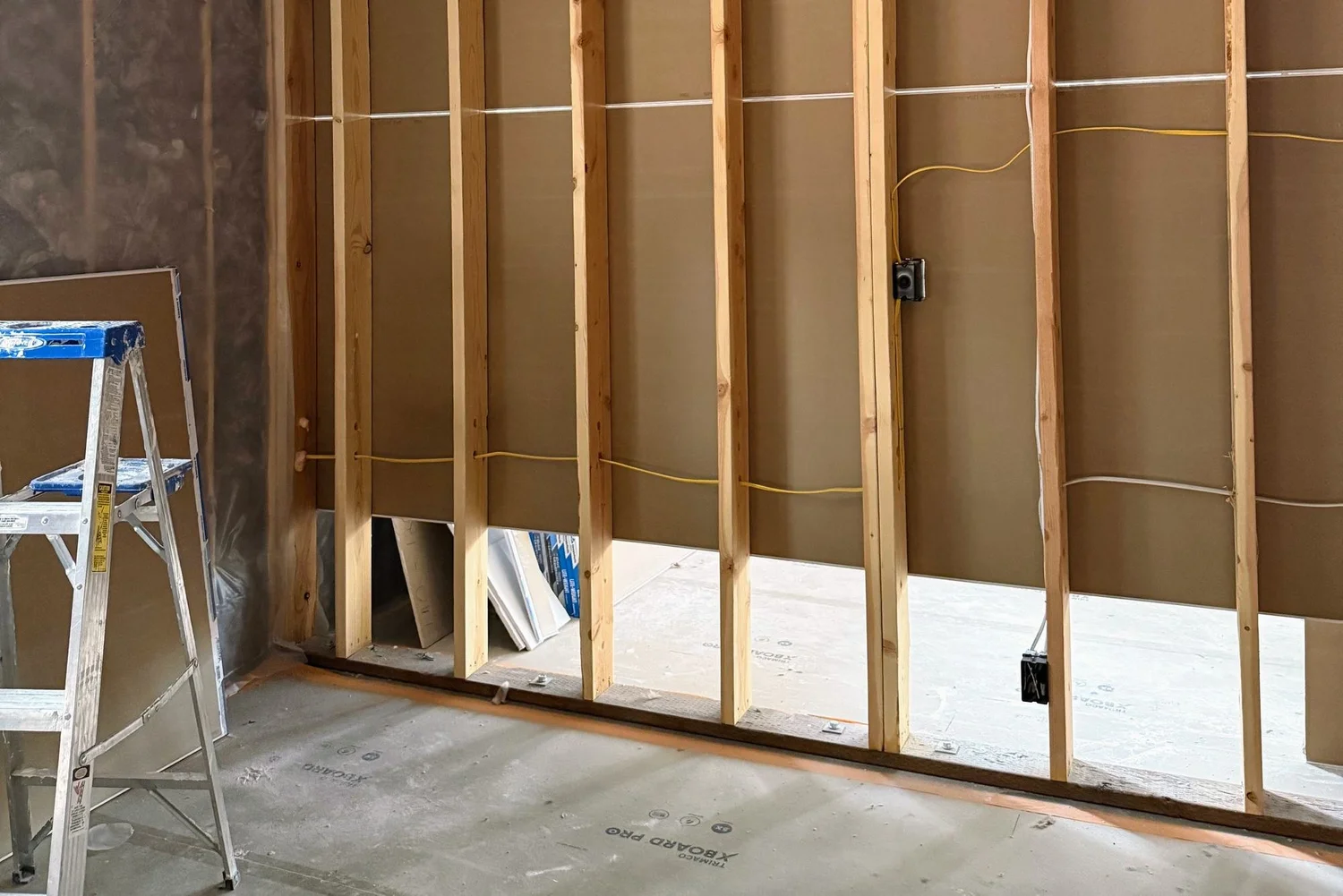
Interior walls are framed and drywalled with nothing inside, the way most homes are built. That's fine for most rooms.
Trade-off: sound carries between rooms, especially from bathrooms and laundry.
We recommend
Sound-insulated walls and floors
We fill chosen interior walls, and floors between levels, with mineral wool made for sound. We recommend it most around bathrooms, laundry, and the kitchen, so bedrooms and offices stay quiet.
Trade-off: adds cost for each wall, and it makes rooms quieter, not soundproof: doors and gaps still carry sound.
FAQ
Common questions
What's the best insulation for a cold-climate home?
The one that's installed without gaps, in a house that's sealed tight. Fiberglass, mineral wool, and cellulose all work well; what changes is how much fits in the wall and how each handles moisture and fire. Our packages step up from fiberglass batts, to mineral wool, to a foot of dense-packed cellulose.
Do you use spray foam insulation?
Only where it's the right tool: under the roof deck on Good-package vaulted ceilings, and canned foam to seal small gaps. Elsewhere we favor cellulose, mineral wool, and rigid board, which are easier to repair and have a smaller carbon footprint.
Do you insulate garages, shops, and outbuildings?
Any space that will be heated gets insulated and sealed to the same envelope package as a house. An unheated garage or shop doesn't need it, but if you might heat it later, we can plan the framing and wiring so insulation is easy to add.
Want to see it on a real job?
Ask us for a site visit to a home under construction.