Structure & Envelope · Ceiling style
Flat or vaulted ceilings, built for snow country
A flat ceiling with an insulated attic is the most affordable way to build a well-insulated home. A vaulted ceiling that follows the roofline gives tall, open rooms, but costs more because the insulation has to fit in or on top of the roof itself.
Both are compared on the same five things:
Your options
Pick the ceiling you want
Relative cost compares the roof and ceiling on a typical 2,000 square foot home. You can mix both, like a vaulted great room with flat ceilings over the bedrooms.
Flat ceiling
Roof trusses with a flat ceiling and a deeply insulated attic above. It's the most affordable way to reach high insulation levels, and the attic gives wiring and ducts an easy path.
- Look / Style
- Flat ceilings with an insulated attic above
- Maintenance
- Low
- Lifespan
- Life of the house
- Relative Cost
- $
- Best For
- Lowest overall cost at any package level
Why people pick it
- Lowest overall cost, at any package level
- Easy path for wiring and ducts
Trade-offs
- No tall, open ceilings
Vaulted ceiling
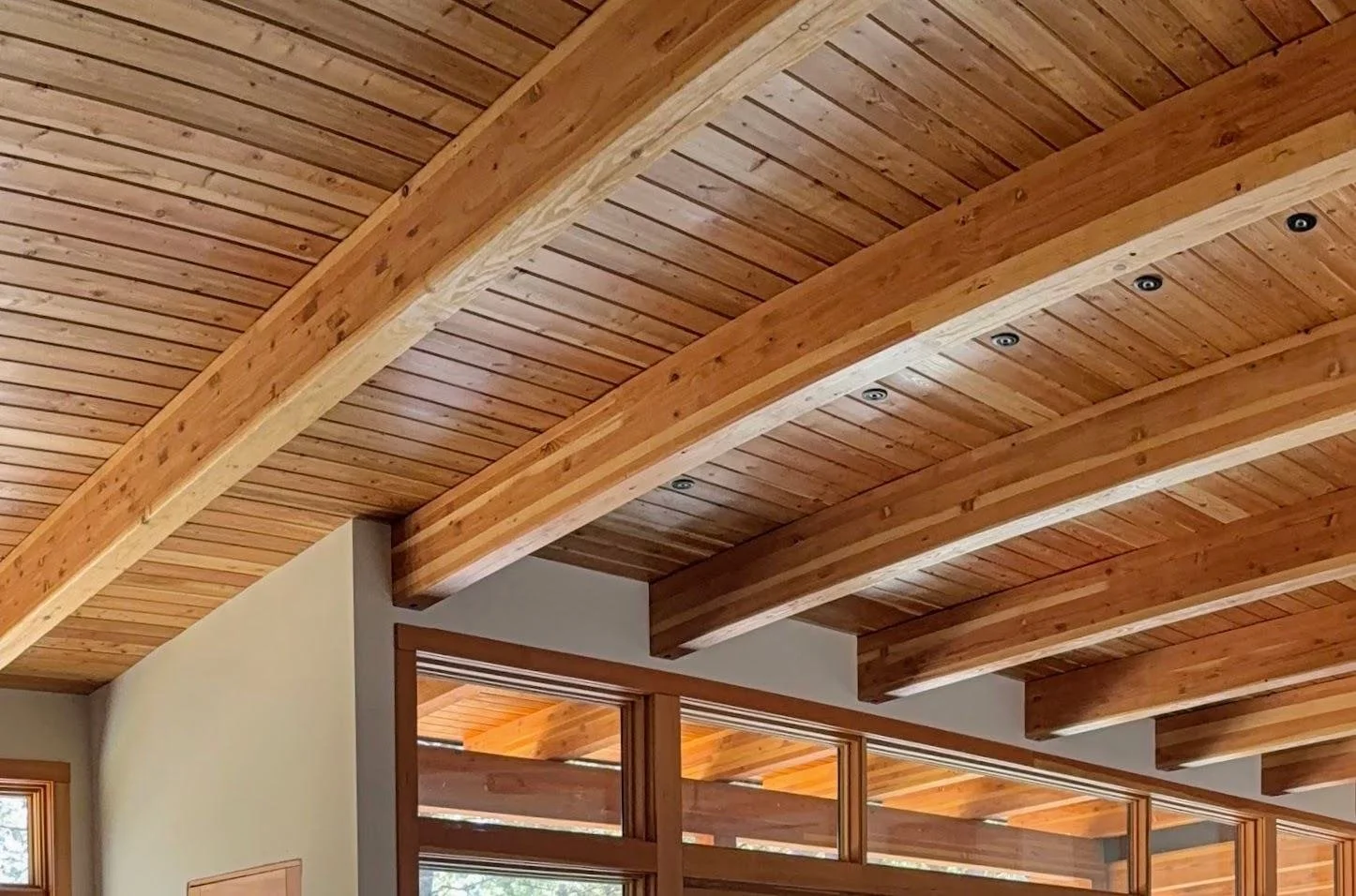
The ceiling follows the roofline for tall, open rooms, the look of many Methow homes. With no attic, the insulation has to fit in or on top of the roof itself, so a vaulted ceiling costs more at every package level.
- Look / Style
- Tall ceilings that follow the roofline
- Maintenance
- Low
- Lifespan
- Life of the house
- Relative Cost
- $$
- Best For
- Open, light-filled living spaces
Why people pick it
- Tall, open, light-filled rooms
- The classic Methow look
Trade-offs
- Costs more than a flat ceiling at every package level
Side by side
| Feature | Flat ceiling | Vaulted ceiling |
|---|---|---|
| Look / Style | Flat ceilings with an insulated attic above | Tall ceilings that follow the roofline |
| Maintenance | Low | Low |
| Lifespan | Life of the house | Life of the house |
| Relative Cost | $ | $$ |
| Best For | Lowest overall cost at any package level | Open, light-filled living spaces |
Set by your envelope package
How we build a vaulted roof
If you choose a vaulted ceiling, the way the roof is insulated comes with the envelope package you picked. A flat ceiling is always a vented attic with deep blown-in insulation.
With the Good package
Spray foam + insulation
Spray foam seals the underside of the roof deck, with insulation below it.
Plus: Proven, handles complex roof shapes. Trade-off: Relies on spray foam.
With the Better package
Insulated roof deck
Rigid foam boards on top of the roof deck keep the structure warm and dry, with more insulation below.
Plus: No spray foam, very durable. Trade-off: A thicker roof edge.
With the Best package
Vented “cold roof”
The insulated deck plus a ventilated gap under the metal roof, with the overhangs built outside the sealed shell.
Plus: Best protection against ice dams in deep snow. Trade-off: The most labor and the thickest roof edge.
FAQ
Common questions
Do vaulted ceilings cost more to build?
Yes, at every package level. With no attic, the insulation has to fit inside or on top of the roof framing, which takes more material and labor than blowing insulation into an attic.
How do you prevent ice dams on a vaulted roof?
By keeping house heat out of the roof: an airtight ceiling, plenty of insulation, and on our Best package a vented gap under the metal roofing that keeps the roof surface cold so snow doesn't melt and refreeze at the eaves.
Can I mix flat and vaulted ceilings?
Yes. Many homes have a vaulted great room and flat ceilings over bedrooms and baths. Each area is built to your chosen package.
Related decisions
Not sure which fits?
We'll walk through ceilings and roof options with you during pre-construction and price each one on your plans.