Planning & Design · Our approach
Our approach to building
A good house should be comfortable in January and July, efficient to heat and cool, and built well enough to hand down. We get there with solid craftsmanship, an airtight, well-insulated shell, and fresh air year-round, tuned for hot summers, cold winters, and wildfire smoke. We choose lower-impact materials where we can, and we keep an eye on your budget the whole way, spending where it pays you back for decades and skipping what doesn't. That thinking goes into every project, whichever envelope package you choose.
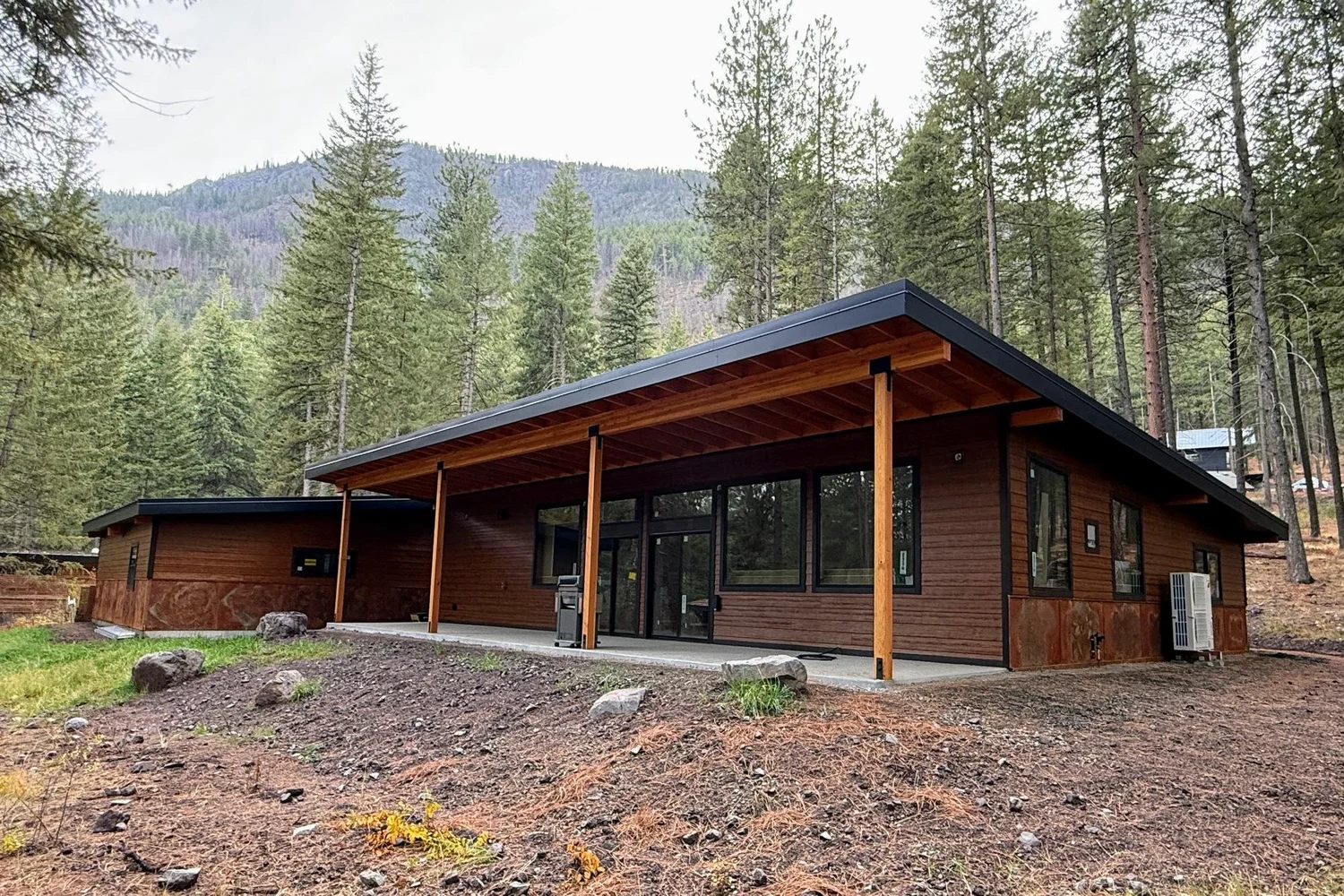
Every Bedrock home
How we build it
Seven ideas, adapted for Methow Valley snow, cold, and wildfire.
Right-sized and simple
A well-planned home doesn't need extra square footage. Simple shapes and roof lines, with fewer corners and jogs, cost less to build, heat, and maintain, and leave more of the budget for what you'll actually use.
More house for your money
Fewer places for leaks and problems
Sealed tight
We seal every home carefully and test it with a blower door, a fan test that measures air leaks, so heat stays in and drafts stay out.
No cold drafts
Lower heating bills
Well insulated
Methow winters are long and cold, and July and August can top 100°F. A thick, continuous blanket of insulation in the walls and roof, with no gaps, keeps the heat in when you want it and out when you don't.
Warm, even rooms all winter
Cooler rooms through summer heat
A smaller heating and cooling system
Fresh air, on purpose
A tight house needs planned ventilation. A heat-recovery ventilator brings in filtered outdoor air while swapping heat with the stale air going out. It keeps the warmth inside in winter and helps keep summer heat out.
Healthy indoor air with the windows closed
Cleaner air during smoke season
Less moisture and condensation
Efficient, right-fit systems
Heating and hot water are sized to the house and picked for the job: heat pumps where they shine, and propane, like a tankless water heater, where it makes more sense.
Lower energy bills
Equipment that suits your site and fuel
Durable, healthy, lower-carbon materials
We choose materials that last, handle water well, and keep indoor air healthy, and favor options like cellulose and mineral wool over foam and fiberglass where they do the job.
Less upkeep over the years
A smaller carbon footprint
Built for snow, cold, and fire
Every home is designed for heavy snow loads and deep cold, and we talk through fire-resistant materials and details for your site.
Roofs made for Methow winters
Choices that suit wildfire country
Set by your envelope package
How far each home goes
Every package follows these ideas. The higher packages go further: tighter air sealing, thicker insulation, and a high-efficiency ventilator.
FAQ
Common questions
What makes a home high performance?
It's sealed tight and tested, well insulated, ventilated with fresh filtered air, and heated with efficient equipment. Together, those make a home that's more comfortable, healthier, and cheaper to run.
Does an energy-efficient home cost more to build?
Some parts cost more up front. A right-sized, simple design offsets much of that, and you save on heating and upkeep for as long as you own the house.
How do you build for Methow Valley snow and wildfire?
Every roof is designed for local snow loads, and simple roof lines shed snow more predictably. During design we also talk through fire-resistant roofing, siding, and details that suit your site.
Have a project in mind?
Let's set up a first meeting and talk it through.