
Systems · Heating & cooling
Heating and cooling for Methow winters and smoky summers
In the Methow you need both: heat for long, cold winters and cooling for hot summers and the smoky weeks when the windows stay shut. Almost every home we build runs on heat pumps, sized small because the envelope does most of the work. You choose how that heat reaches each room, and what you add for warm floors and a fire.
Every option is compared on the same five things:
Your options
How the heat reaches each room
Every option is a cold-climate heat pump that heats in winter and cools in summer. Relative cost compares installed systems on a typical 2,000 square foot home.
Ductless mini-splits
A small outdoor unit feeds quiet wall or ceiling units in the main rooms. Each one heats and cools its own zone, so you set rooms to the temperature you want. It's what we install in most homes.
- Look / Style
- Small wall or ceiling units in main rooms
- Maintenance
- Low
- Lifespan
- 15–20 years
- Relative Cost
- $$
- Best For
- Most homes, ADUs, and open floor plans
Why people pick it
- Heats and cools in one system
- Room-by-room control
- Earns the most energy-code credit
Trade-offs
- Indoor units are visible on walls or ceilings
- Closed-off bedrooms may each need a unit
Ducted heat pump
One indoor air handler, hidden in a closet or mechanical room, sends heated or cooled air through ducts to a vent in every room. You see grilles, not equipment, and the whole house stays even.
- Look / Style
- Grilles in each room; equipment hidden
- Maintenance
- Low
- Lifespan
- 15–20 years
- Relative Cost
- $$$
- Best For
- Owners who don't want wall units; homes with many closed rooms
Why people pick it
- No units on the walls
- Every room gets conditioned air
- Can filter all the air in the house
Trade-offs
- Needs room for ducts inside the heated house
- Costs more than mini-splits
Mixed: ducted and wall units
A small ducted unit serves the bedrooms through hidden vents, and wall or ceiling units handle the big open rooms. It's a common way to keep bedrooms tidy without ducting the whole house.
- Look / Style
- Hidden vents in bedrooms, wall units in living areas
- Maintenance
- Low
- Lifespan
- 15–20 years
- Relative Cost
- $$$
- Best For
- Homes with a separate bedroom wing
Why people pick it
- No units in bedrooms
- Big rooms heat and cool fast
- Fewer ducts than a fully ducted system
Trade-offs
- Two kinds of equipment to maintain
- More planning for duct space
Side by side
| Tag | Ductless mini-splits | Ducted heat pump | Mixed: ducted and wall units |
|---|---|---|---|
| Look / Style | Small wall or ceiling units in main rooms | Grilles in each room; equipment hidden | Hidden vents in bedrooms, wall units in living areas |
| Maintenance | Low | Low | Low |
| Lifespan | 15–20 years | 15–20 years | 15–20 years |
| Relative Cost | $$ | $$$ | $$$ |
| Best For | Most homes, ADUs, and open floor plans | Owners who don't want wall units; homes with many closed rooms | Homes with a separate bedroom wing |
Set by your envelope package
How big, and which combinations fit
Your envelope package sets how much heat the house loses, so it sets how big the system is. It also decides which heating and hot water combinations meet Washington's energy code. We check yours before we price it.
Good package systems
With a code-built shell, the energy code steers the systems: heat pump heating and cooling and a heat pump water heater, plus hot-water plumbing laid out to waste less heat. Fresh air comes from quiet, always-on exhaust fans.
Fresh air: quiet exhaust fans.
Better package systems
A tighter shell and heat-recovery ventilation earn energy-code credit of their own, so you have more freedom: mini-splits or a ducted heat pump, and a heat pump or propane tankless water heater.
Fresh air: heat-recovery ventilator.
Best package systems
Heat loss is so low that a single small heat pump can carry the house, and a stove must be small or the room overheats. You have the most freedom: a heated slab as main heat or propane hot water both work.
Fresh air: high-efficiency heat-recovery ventilator.
Add-on · Floor heat
Warm floors
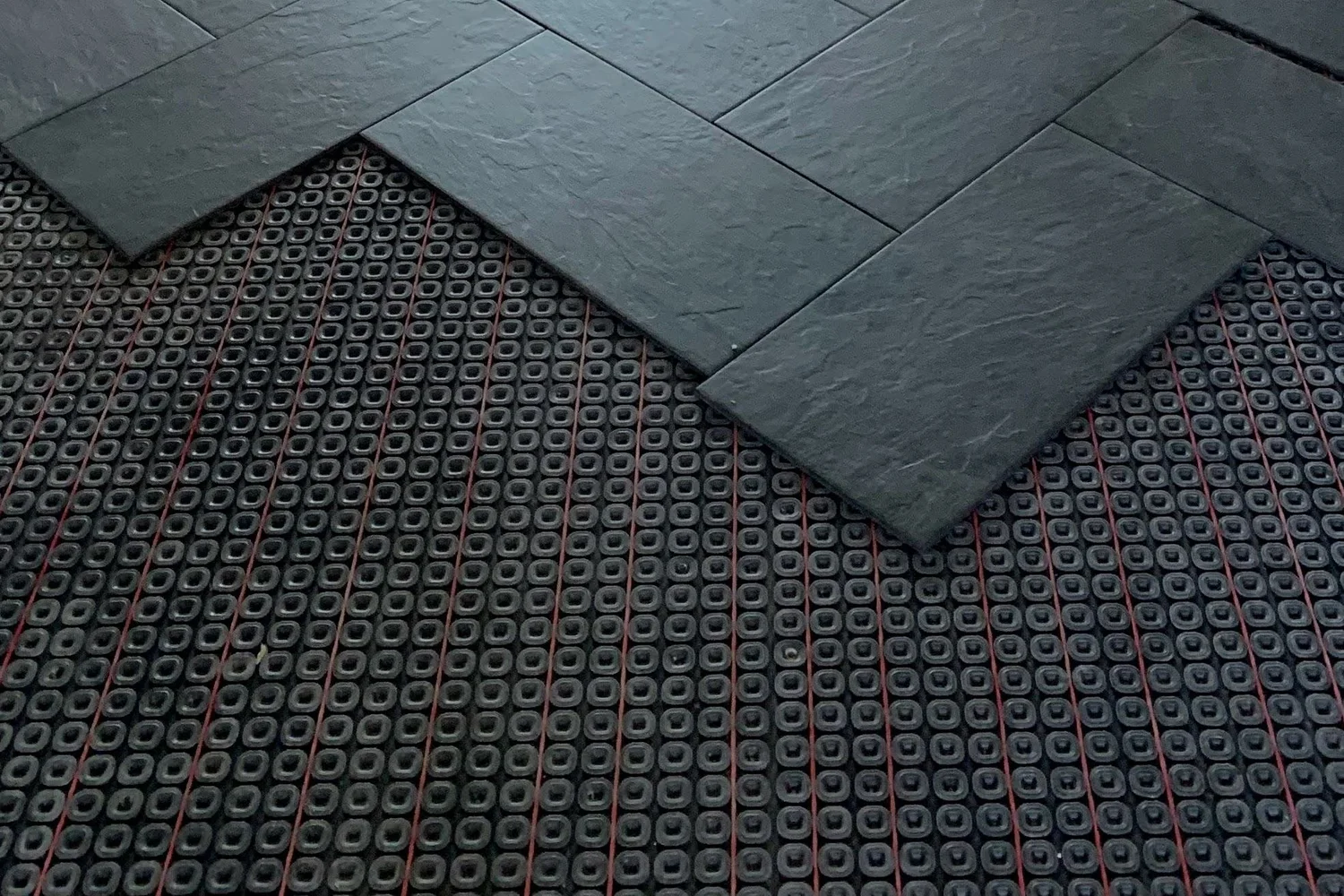
Radiant heat warms the floor itself. It's the most comfortable heat there is, and it pairs naturally with a concrete slab or tile. Most of our homes use it in bathrooms and entries; some use it to heat the whole slab.
Warm floors in baths and entries
A thin electric heating mat or cable goes under the tile in bathrooms, entries, and mudrooms. Step out of the shower onto a warm floor, and boots dry by the door.
- Look / Style
- Invisible: warm tile underfoot
- Maintenance
- Low
- Lifespan
- Life of the floor
- Relative Cost
- $
- Best For
- Bathrooms, entries, and mudrooms
Why people pick it
- Warm tile where you notice it most
- Low cost to install
- Works over a slab or a framed floor
Trade-offs
- Electric heat costs more to run than a heat pump
- Limited area before it affects the energy code
Heated slab (electric)
Electric heating cable is tied into the slab before the pour, turning the whole concrete floor into a gentle radiator. It's a favorite with polished concrete floors, with mini-splits for cooling and quick warm-ups.
- Look / Style
- Polished or finished slab that's warm to the touch
- Maintenance
- Low
- Lifespan
- Life of the slab
- Relative Cost
- $$
- Best For
- Slab homes where concrete is the finished floor
Why people pick it
- Warm floor everywhere
- Silent, even heat with nothing on the walls
- Great with polished concrete
Trade-offs
- Costs more to run than heat pumps
- Slow to warm up or cool down
- Uses up energy-code credit, so it suits our Best package
Heated slab (hot water)
Warm water from a heat pump or boiler flows through tubing in the slab. It's the most efficient way to heat a whole slab, and the most involved to install.
- Look / Style
- Polished or finished slab that's warm to the touch
- Maintenance
- Medium
- Lifespan
- 15–20 years for the heat source; tubing lasts the life of the slab
- Relative Cost
- $$$$
- Best For
- Larger slab homes heated mostly by the floor
Why people pick it
- Lowest running cost for a heated slab with a heat pump
- Even, quiet heat
- Can share equipment with hot water
Trade-offs
- Highest install cost
- More equipment in the mechanical room
Side by side
| Tag | Warm floors in baths and entries | Heated slab (electric) | Heated slab (hot water) |
|---|---|---|---|
| Look / Style | Invisible: warm tile underfoot | Polished or finished slab that's warm to the touch | Polished or finished slab that's warm to the touch |
| Maintenance | Low | Low | Medium |
| Lifespan | Life of the floor | Life of the slab | 15–20 years for the heat source; tubing lasts the life of the slab |
| Relative Cost | $ | $$ | $$$$ |
| Best For | Bathrooms, entries, and mudrooms | Slab homes where concrete is the finished floor | Larger slab homes heated mostly by the floor |
Add-on · Fire & backup heat
A stove for outages and January nights
A stove gives you heat when the power's out and a fire to gather around on a January night. It's an add-on to your heat pumps, not a replacement.
Wood stove
A certified wood stove heats the main room on the coldest nights and keeps you warm when the power is out. We install the stove, hearth, and chimney ourselves.
- Look / Style
- Freestanding stove on a hearth
- Maintenance
- Medium
- Lifespan
- About 20 years
- Relative Cost
- $$
- Best For
- Living rooms; homes where outages happen
Why people pick it
- Heat without power
- A real fire for ambiance
- Uses local firewood
Trade-offs
- Wood to haul, stack, and burn
- A tight house needs a small stove and outside air
Propane stove or fireplace
A direct-vent propane stove or fireplace gives instant flame at the push of a button and many models run without electricity. It's a great fit if the house already has propane.
- Look / Style
- Freestanding stove or wall fireplace with glass front
- Maintenance
- Low
- Lifespan
- 15–25 years
- Relative Cost
- $$
- Best For
- Homes already on propane for cooking or hot water
Why people pick it
- Fire at the push of a button
- No wood to haul
- Many models work in a power outage
Trade-offs
- Needs a propane tank and deliveries
- Less of a real-fire feel
Side by side
| Tag | Wood stove | Propane stove or fireplace |
|---|---|---|
| Look / Style | Freestanding stove on a hearth | Freestanding stove or wall fireplace with glass front |
| Maintenance | Medium | Low |
| Lifespan | About 20 years | 15–25 years |
| Relative Cost | $$ | $$ |
| Best For | Living rooms; homes where outages happen | Homes already on propane for cooking or hot water |
Every Bedrock home
How we heat and cool
However you heat, these come with every system we install.
Sized to your house
We size heating and cooling from a room-by-room heat-loss calculation on your plans and envelope package, not a rule of thumb. A right-sized heat pump runs steadily and quietly, and a well-built house needs a smaller, less expensive one.
Smaller equipment when the envelope is better
Steady, quiet comfort
Outdoor units above the snow
Outdoor heat pump units sit on wall brackets or stands above the snow line, out from under roof edges where snow and ice slide off. They keep breathing all winter and last longer.
Units keep running through deep snow
Protected from roof slides
Everything inside the warm side
Refrigerant lines, ducts, and pipes stay inside the heated, sealed part of the house wherever we can, and never in the crawlspace on our Better and Best packages. Less heat is lost, nothing freezes, and the air seal stays intact.
Less heat lost through ducts and lines
Fewer holes in the air seal
Cooling for summer and smoke season
Every heat pump we install also cools, so you can keep windows shut through hot nights and smoky weeks and still sleep comfortably. Summer cooling comes with the heating system, not as an add-on.
Comfortable during wildfire smoke
No separate AC system
FAQ
Common questions
Do heat pumps work in Methow Valley winters?
Yes. Cold-climate heat pumps keep heating well below zero, and a well-sealed, well-insulated house needs much less heat to begin with. We size them to your home's actual heat loss and plan a backup, like a wood stove, for the coldest nights and power outages.
Mini-split or ducted heat pump?
Mini-splits put a small wall or ceiling unit in each main area: efficient, zoned, and simple to install. A ducted heat pump hides the equipment and sends air through vents in every room, but needs space for ducts inside the heated part of the house. We lay out both on your plans.
Is radiant floor heat worth it?
For comfort, many owners say yes: a warm tile floor in a bathroom or a warm slab is hard to beat. Electric floor heat is affordable to install but costs more to run than a heat pump, so we use it where comfort matters most and let the heat pump carry the rest of the house.
Related decisions
Not sure which system fits?
We'll lay out heating and cooling on your plans during pre-construction and check every combination against the energy code.